 Sorry dear readers, but I guess we missed this important day. I had it written down on my calendar as being June 4, when in reality it was back in April. Why do we need an awareness day to celebrate those slimy wads of fur the cat urfs up on our carpets every once in a while? Aren’t you curious to know more about why cats do this?
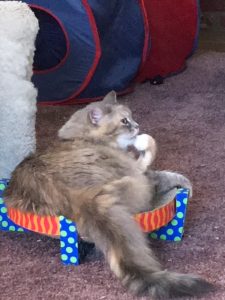
Here’s something that maybe you didn’t know—cats aren’t the only animals that hack up hairballs. All grooming animals do so—including rabbits, llamas, and cattle. And the hairball itself isn’t just a hairball. It has a technical name: trichobezoar. There you go.
OLYMPUS DIGITAL CAMERA
You’re ready for the next trivia contest in your neighborhood.
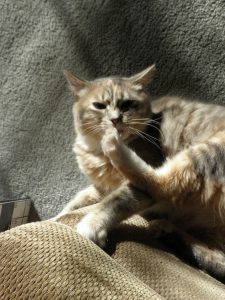
What’s normal for a cat? One veterinarian says no more than two hairballs per year. More could indicate a problem. Some cats do not regurgitate hairballs—their system just passes swallowed fur through the system and into the litterbox.
There are ways to prevent hairballs—more frequent brushing, offering a regular petroleum-based treat, making sure cat is drinking enough water (an interesting fountain can help with this), and some cat foods are designed to improve skin and fur, thus reduce shedding. Also an active cat is less likely to groom out of boredom. Your busy furball is less likely to hack up those icky hairballs. For more information check out: https://www.petmd.com/cat/grooming/evr_ct_cat_hairballs
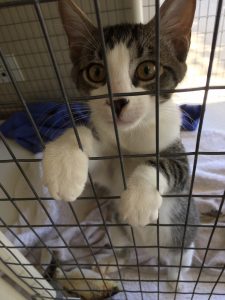 Many cities throughout the US have adopted a new program called SNR (Shelter, Neuter, Release). Instead of keeping stray and surrendered cats in shelters or euthanizing them, agencies in CA, MI, CO, FL and other states are returning them to the “streets.” In most cases, to their original habitat, if they had one. But this program, like so many involving animals, is controversial.
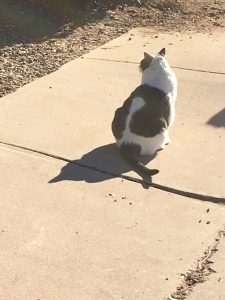 2,000 cats over the last two years. For some this seems like a step backward in the work so many have done over decades to remove cats from the streets.
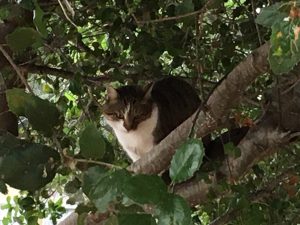 We love our cats, admire them, baby them, become frustrated with them, and sometimes don’t understand them at all. But if we pay attention, there’s actually a lot we can learn from our cats. Even the things they do that we perceive as naughty or destructive or downright exasperating, are often simply the way of the cat—things that make the cat so interesting and endearing. Mimic some of the cats’ natural abilities and activities, and who knows how far you could soar in your career or craft or just in the way you live life.
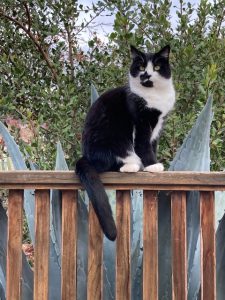 challenging project?
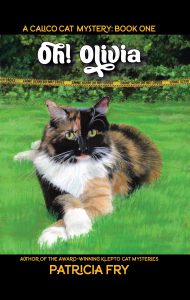 Yes, we’re getting rave reviews and 5-star ratings for Oh! Olivia. Here’s what readers are saying:
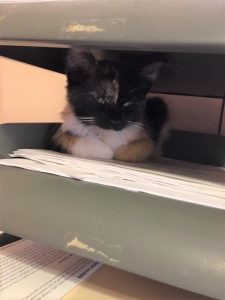 Actually I want to talk about the materializing cat—the cat who just seems to appear out of nowhere. Do you have such a cat? We do. Her name is Olivia. She has the ability to move from here to there without being seen. As a skittish kitten we would watch her scoot under a dresser to hide from us and while we’re on our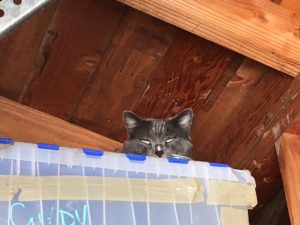
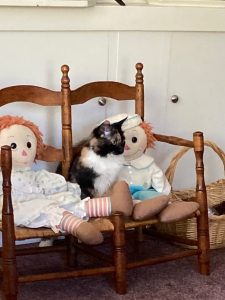 hands and knees trying to coax her out, she’d appear behind us.
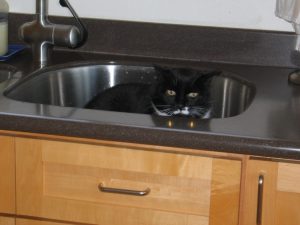 and we had a battle on our hands.
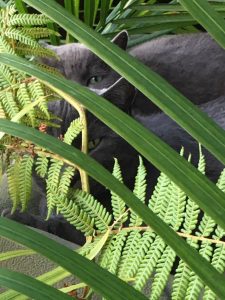 “She should be right there in front of you.”
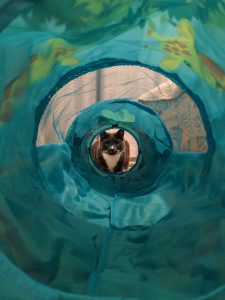 Olivia’s ability to materialize. Whether we’re playing, looking for her at feeding time or to give her a treat, or just to check on where she is to make sure she’s safe—like you do with a cat who tends to find trouble, she does a crazy disappearing and reappearing act.
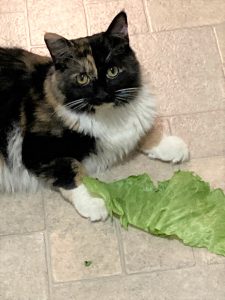 What silly things does your cat do? Just about every cat I’ve known brought something new and different to the household, and I’d say that all of those cats had a silly bone. Be in a cat’s presence for long enough and pay attention, and you will see evidence of that silly bone.
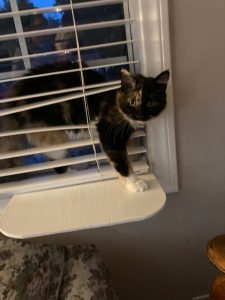 other day to look for something to wear and found Olivia hanging by a claw from a pair of my jeans. I thought it was rather funny. I’m sure glad I found her before something catastrophic happened.
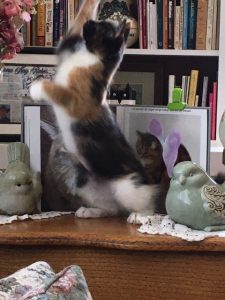 rolled off tables, and the back of the sofa more than once. But the fall that tickled my funny bone most was when she rolled off my desk into the trash can. She was fine, only surprised and maybe embarrassed. It was hilarious but she would not repeat it so I could get a video. Oh! Olivia.
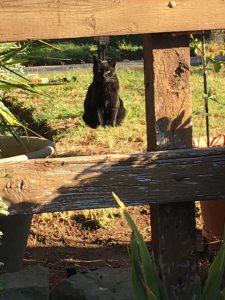 Can cats predict the future? Many cats have been accused of it. Is this a supernatural fete, a myth, or can cats actually foresee things that are about to happen? Here’s a site featuring seven things cats are known to predict or notice or point out. How do they do it? Experts believe it’s simply that cats pay attention to and use senses that we may ignore in ourselves.
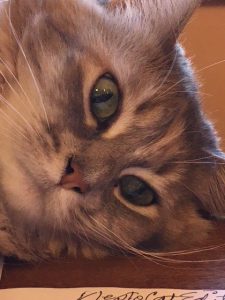 case of earthquakes, their ultra sensitive paw pads feel the tremors before we do, but a cat will often react by becoming restless or even hiding just before disaster strikes.
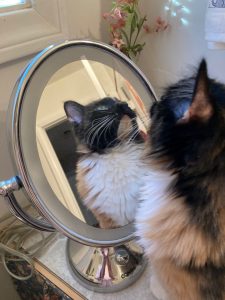 Those of us with cats believe they react to our moods. They seem to understand and even feed off our mood. They instinctively know when to stay out of your way and when to comfort you. If your cat is stressed, you might check your own level of stress—he could be feeding off of your current mood.
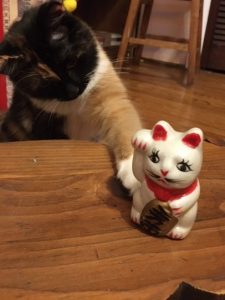 with helping 25 patients pass. Everyone knew when a patient was close, as Oscar would wander into their room and sit with them until they passed.
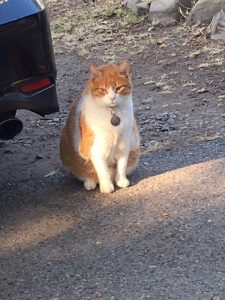 I wonder if a cat can also predict the weather by his behavior—on days when it is going to be cold out, does he hunker down in his bed next to the fireplace waiting for someone to light it or linger hunkered down under the covers that morning? If it is going to be a bright, sunny, and warm day, does the cat stretch out comfortably where the sun puddles will appear later that morning?
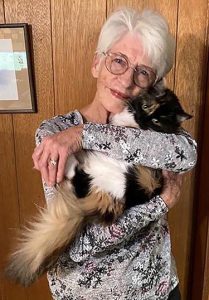 If your household is like ours, you’re probably constantly making concessions for your cats. Just now, I stopped working on this blog post for several minutes while Olivia stood on my lap (in the way of my keyboard) insisting (in her sweet way) that I use both hands to pet, scratch, rub, and love on her. Of course I accepted the invitation. Cats can be ultra charming.
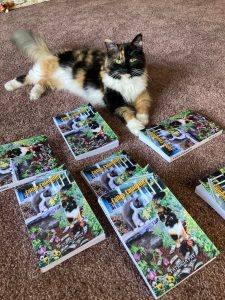 to play with your cats or sit and watch them play or to just admire them? I’ll sometimes just watch a cat sleep.
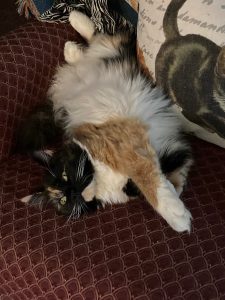 longer. She’ll come into my office and become very vocal. I don’t speak cat-ese, but she makes it clear what she wants—a wild and crazy play session. I usually can’t resist—I mean who can work with a constant MEOW MEOW in the background? And I’m always glad I was swayed by Olivia because we do have a lot of fun playing together and it’s good for my back and shoulders to get up and move around several times throughout my work day.
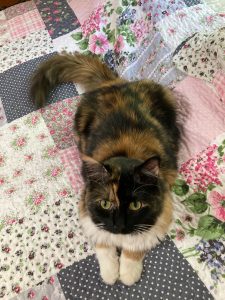 socialization. We’ve begun to coordinate visits from family members and neighbors in order to help Olivia begin to feel comfortable around people other than just us.
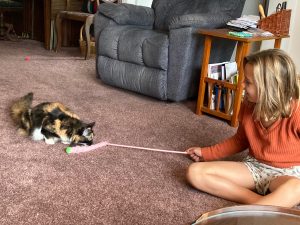 Occasionally Nancy would toss her a treat or speak to her. Olivia kept a suspicious eye on Nancy, but she’d move forward and eat the treat. Nancy continually wriggled the toy, which had Olivia’s eye. As Olivia became more relaxed, she moved closer—slowly closer, finally engaging in play with Nancy. We didn’t push Olivia. We let her establish her comfort level, and Nancy left on a high note—while Olivia was still interested in playing. Very well done, I’d say and a good model for our next visitor. Nancy will be back and continue to have good experiences with Olivia. In fact, Olivia jumped up onto her window perch to watch Nancy walk back around to her house.