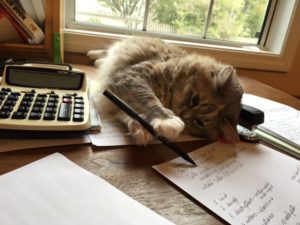
 Because Book 27 of the Klepto Cat Mystery series ended with a bit of a cliffhanger, fans are waiting even more fervently for Book 28 and I’m doing my best to get it out quickly. However, there is a process to producing a book and it can take time. First you have to write it, then there are hours and hours of editing. Once I’m satisfied with the plot and the way it is presented, I ask someone else to read it. Sometimes it’s one person—sometimes a couple. Then I do more work on the story. Once I’m completely satisfied with the story, I turn it over to an editor/proofreader. She always sees things I miss related to grammar, plot, and those bothersome commas. I’ve never been strong on the proper use of commas and it doesn’t help that comma rules are changing.
When I get my much improved manuscript back from the editor, I edit it another time or 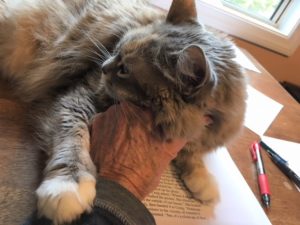 three or five. Well, I want it to be the best it can be for you—the reader.
Next comes the formatting. Before publishing, the book must be formatted correctly for print and also for Kindle—two different processes. First comes the formatting for the print book. Once I see it in print form (after working on it for weeks on the computer screen), not only do I check for correct spacing, indentation, etc., I scrutinize it carefully again—word-by-word. Sometimes many more changes are made.
During this time, I’m also working with cover designer, Bernadette Kazmarski. If we’re lucky, the cover and the formatting are ready at the same time (although I do my best to have a cover weeks before the formatting is completed).
Once I okay the cover and all of the changes I’ve asked for are made correctly, I write the back- cover copy and we go into production. And that’s when the person who formats the book for Kindle takes over. There’s nothing she can do until I’ve finalized the editing and okay the book to be published in print form. Only then, do I send the manuscript to the formatter for the ebook version. That’s why it can take two weeks or more from the time the print book is published for the Kindle book to be available. Sometimes I hold up the print book until the Kindle formatting is completed. I may do that this time, actually.
So while it seems as though you’re waiting forever to get the next installment of the Klepto Cat Mysteries, you should know that I am always on task. I get up around four in the morning and begin my writing day. I put in 8-10 hours almost every day. And I average six books per year. Do any of your other favorite authors bring out a book every two months?
As you can see, I’m working—but I do have gentle interruptions from time-to time. This is Lily suggesting I need a break.
 Have you read about Mohammed Alaa Aijaleel, the cat man of Aleppo? His world revolves around the many cats left homeless in the war-torn city. He has built a shelter and he cares for numbers of cats. https://www.thedailybeast.com/the-man-saving-aleppos-homeless-kittens
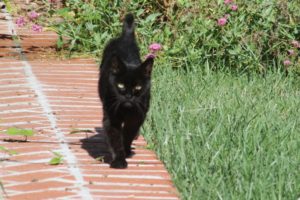 Maybe you saw the latest article about the controversy over the way we’re handling the feral cat situation here in the US. It seems to be the birders against the TNR people. One reporter set out to find a solution. It doesn’t appear we have one yet. Such a shame. And the blame is on our shoulders. Yes, it’s a human failing. According to some, the huge attempt to educate people to spay/neuter, doesn’t seem to be working, neither does the TNR programs. But I have to believe it’s helping. Don’t you think that the huge efforts of so many people who are trapping, neutering, evaluating, fostering, adopting, and sometimes releasing—but feeding feral cats
 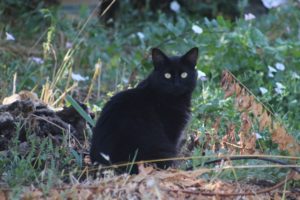 is making a difference? Here’s the article on the topic. I don’t see anything new here, but maybe it will get some brainstorming going and new and humane solutions will arise.
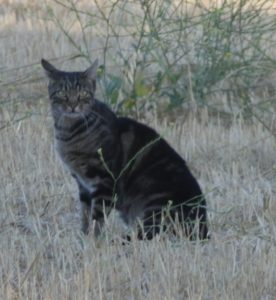 In the meantime, here’s an interesting concept—someone has studied what makes a cat more adoptable. Which cat is most often chosen for adoption? One article claims it is the cat that acts most friendly and cuddly.
 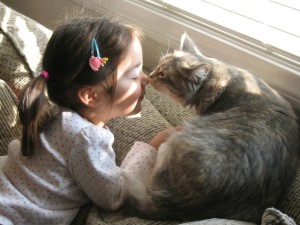 Have you ever thought about fostering cats or kittens? It can be such a help to those who do so much to save homeless cats and to the cats that need to learn how to be in a home environment. Fostering is a way to prepare cats and kittens for a forever home. Foster parents have a lot to teach cats who have never experienced a loving home environment. They can help to evaluate cats and kittens so they’re ultimately placed in the right circumstance. A lethargic older cat should probably go to a home without small children, for example. A highly active cat might do well in a larger home with room for a lot of challenging exercise apparatus and children.
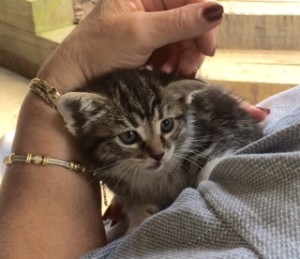 lovely home situation. But it’s not always easy being a foster parent. First, there’s the adjustment period which sometimes comes with challenges. Sometimes it takes work to acclimate a cat to new surroundings. Then there’s the issue of becoming attached to a cat or kitten you can’t keep.
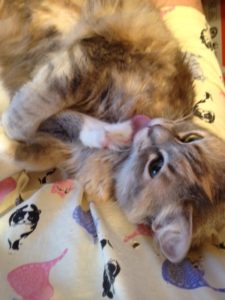 Cats are very good at relaxing. A cat at rest presents a pleasant scene. Makes me smile. But as easily and convincingly a cat can be at rest, she can also spring to action without warning. That ability is part of her survival mechanism. However, most cats, who feel safe in their surroundings, will wake up slowly, stand and stretch and yawn before insisting on a meal, a treat, or a scratch behind the ear. Some will take a long lick-bath before going on to the next task on their agenda—bird-watching, strolling through the garden, climbing in the middle of your current project, or begging for food…
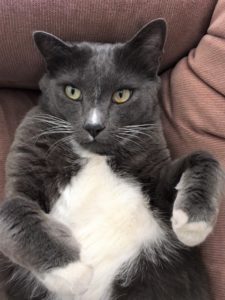 sleeping or at-rest cat gets into. A cat can put Gumby to shame with their contortions. But there’s good reason for that. Cats are put together with forty more bones than the human body has—an average of 244 in all. You’d think all those bones would work against each other and prevent the cat from moving with ease. But on the contrary, they’re structured so that the cat can turn and twist and even make herself skinnier than she really is.
 The cat’s clavicle, for example, (collarbone), is not attached to any other bones and this helps the cat squeeze into small spaces. The spine joints are looser than many other animals spines are and this enables them to twist in mid air and (most of the time) land on their feet.
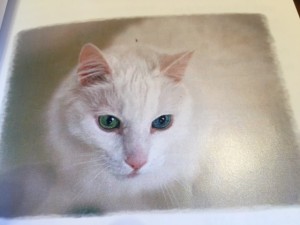 Have you ever had a pure white cat? They are exquisite, aren’t they? We once adopted a white kitten. He had a black mark on top of his head, which disappeared as he matured. He turned out to be an odd-eye cat with one beautiful blue eye and one green eye. Boy was he striking! And he was a wonderful pet until cancer took him.
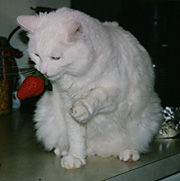 These were the years when our children were small and our cats were inside-outside. When my husband brought home a German shepherd dog, Snowflake moved across the street. She was determined to live with the people over there and they were happy to take her in.
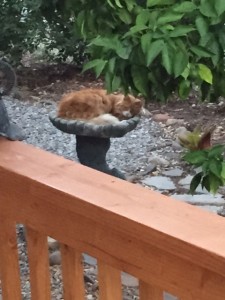 There are reported to be 60 million homeless cats in the United States alone. These are feral cats—born to a feral female—and domestic cats gone wild or roaming free after being abandoned or dumped. While there are numerous organizations and agencies and private parties working very hard to save homeless cats, we don’t seem to be making much progress. Or maybe we are—perhaps we just didn’t have a count on the situation until fairly recently. Maybe the number of homeless cats was much higher before we became so active in trying to save them.
 In Japan, for example, there are several cat islands where there are more cats in residence than people. Aoshima, Japan is one of them. There are more than 100 cats living on the small island and only 15 permanent residents. And the people do feed the cats. They look healthy! Since this island was exposed online, however, the residents are being overwhelmed by tourists. Here’s a site with some amazing photographs of the cats on Aoshima Island.
 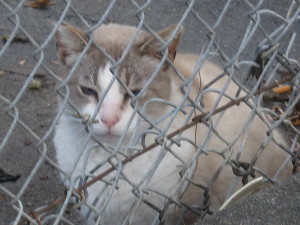 Cats are part of the Japanese tradition and history. In fact upper class Japanese were already living with cats in their homes a thousand years ago. Today there are shrines honoring cats and many beliefs embedded in the Japanese culture involving or related to the cat. This culture came up with Hello Kitty, after all. And they even have cat trains, cat cafés and a train terminal shaped like a cat.
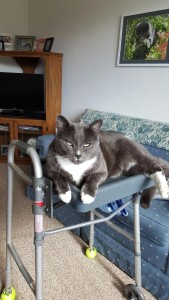 We play with our cats, brush and comb them, and give them treats. Some of us take our cats for car rides, swimming, or horseback riding. Some others dress their cats, put colored caps on their claws, or decorate them in sparkly collars. My mother’s cat likes to ride around on her walker as she pushes it through the house. I used to have my cats groomed, in the days when fleas were impossible to deal with. My Himalayan came home with a sweet pink bow on top of her head once. So cute.
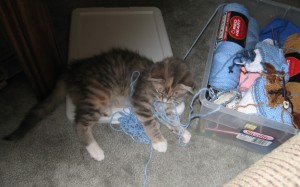 people who want to make a statement with their own way of dressing, odd hair color and all will sometimes color their pets—white poodles, for example, are perfect “canvases” for coloring. Many substances you might consider using on your pet, especially on a cat, can be toxic, however. Here’s a guide to some of them:
 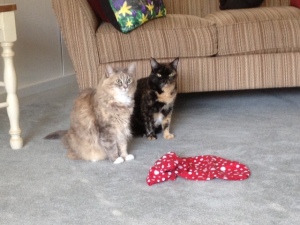 What’s up with butt-sniffing and sister-squabbling among cats? Darn it, cats are just too adorable and sweet to engage in some of the animal-like practices they do. Butt-sniffing, for example. I don’t see Sophie do it, but Lily, my little sweet flower of a cat, likes to put her cute little nose where no cute little nose should go. Why?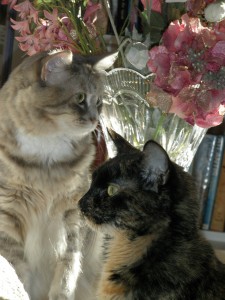
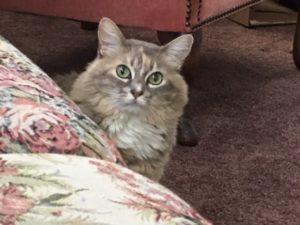 What do you call your cat? We talked about naming cats last week. But do you always address your cat by her given name or are you like many cat people—you have a variety of pet names for her?