 Some cats as they get older need a little help with diet, mobility, and overall care. There are products for that. A senior cat might develop a disease that can be controlled or greatly helped by meds and even diet. Have you seen the array of special diet cat food on the market? There are cat food options for kidney disease, thyroid disease, bladder
 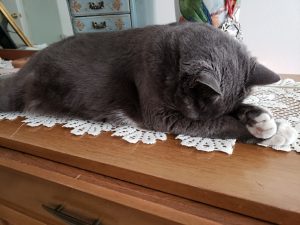 problems, digestive issues, sensitive skin, obesity. There’s even a formula for outdoor cats.
Your older cat might have trouble climbing or jumping up onto his favorite spot on the sofa or your bed. There are ramps and portable stairs to help with that. As cats age some of them get arthritis and find it difficult to climb in and out of a litter box. They actually make litter boxes for older 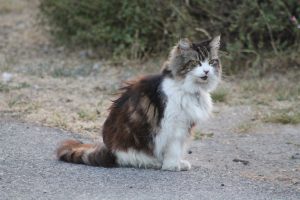 cats. Check out litter boxes with lower sides or with a ramp up to the opening.
Some older cats seem to need more warmth in order to be comfortable. They lay closer to the wall heater or fireplace. Offer a cozy cat bed closer to the heat source. Make blanket tents for her to crawl under and sleep. Purchase a covered bed that helps hold in her body heat or a heated cat bed.
Here’s a site with some innovative items designed for the disabled or older cat. https://iheartcats.com/10-must-have-products-for-senior-cats
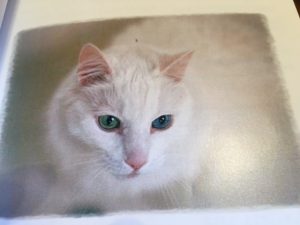 November is Adopt a Senior Pet Month. Here’s a site that offers support and information about the senior pet. For example, did you realize that a dog and a cat are considered seniors between 7 and 10 years old?
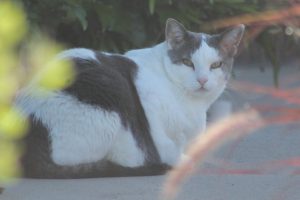 cat or dog when you decide to bring a pet into your home. It’s thought that older pets often bond with new people more easily than kittens do. Some older pets can easily learn new routines and adapt to a family. All it takes is love and time.
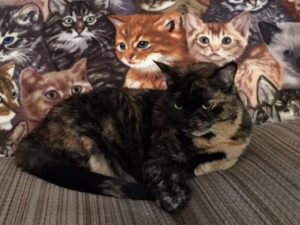
 Luckily, she has been a healthy girl. In fact, she still jumps up onto the bed with ease. I notice she eats less at a time, but she wants to be fed more often, and she seems to appreciate warmth more than ever. She is a short-hair tortie. She likes to curl up under a blanket tent or a sun puddle shining in through a window. She also lays close to the space heater until the sun comes up on a chilly morning.
 than she ever was. Maybe she just doesn’t have the energy to go hide somewhere when someone comes to the door like she did when she was younger. Or she finally realizes these people are not a threat to her.
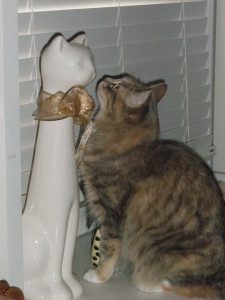 Yes, yet another cat holiday. Today is National Cat Day. This was the brainchild of Colleen Paige. She suggested this celebration in 2005 in order to “help galvanize the public to recognize the number of cats that need to be rescued each year and also to encourage cat lovers to celebrate the cat(s) in their lives for the unconditional love and companionship they bestow upon us.” Here’s more about National Cat Day
 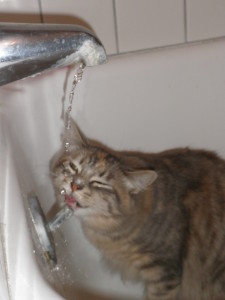 days of observance quite often here. I checked to find out just how many cat “holidays” we have on record now. I discovered that it’s a lot—some of them I’ve never heard of. One of several in March is Cuddly Kitten Day (love this one). In April you’ll find Siamese Cat Day and also Hairball Awareness Day. We always celebrate Hug Your Cat Day in June—another personal favorite. But did you know about National Meow Like a Pirate Day, National Cook
 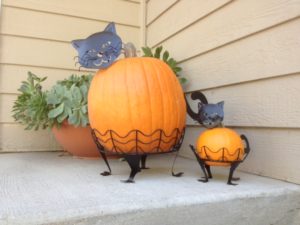 For Your Pets Day, and National Cat Herders Day? There’s a whole lot of celebrating to do when it comes to your cat. Check it out for yourself here. You might want to mark your calendar so you don’t miss an opportunity to put your cat on the pedestal in some interesting or unique way.
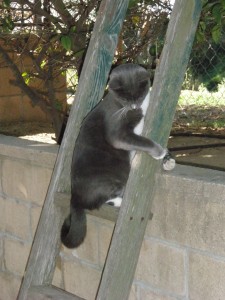 This is another favorite photo topic of mine. Here, you’ll see I caught a rare picture of Smokey (aka Rags) climbing a ladder and who has ever seen a cat with a lettuce leaf? I’ve shared a photo of Olivia with a big lettuce leaf a few times, lately. (Although I did see on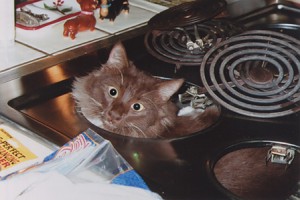
 We talked about photography and cats on Monday. Cats give us so many wonderful photo-ops, but what about those that we miss—those photo opportunities we aren’t swift enough to capture or we just can’t get the angle we want or the cat is skittish and camera-shy?
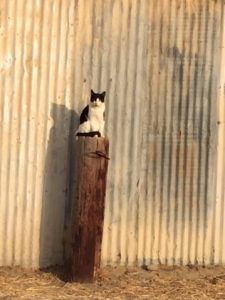 Olivia’s signature stretch. Oh it’s a beauty. She stretches with her paws out in front of her, her butt up in the air, and that gorgeous tail arches across her back touching her head. She does it several times a day, but do you think I can get a good picture of it? Not yet. I’m sharing the best I have so far.
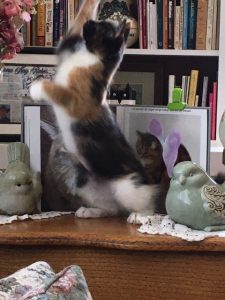 Olivia is quite athletic—oh can she jump. I’ve attempted to get a nice shot of her gracefully twisting in the air after a toy I’ve tossed to her. I’ve even failed, so far, when trying to video her. She’s too fast and her moves unpredictable.
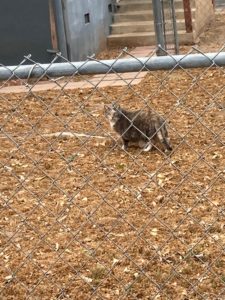
 granddaughter, but that cat quickly escaped my focus. A couple of days ago I saw wide gold eyes staring out at me through a fence and realized it was a black cat in the shadows. Gorgeous shot. He saw me grab for my phone and he split. Missed that one, too.
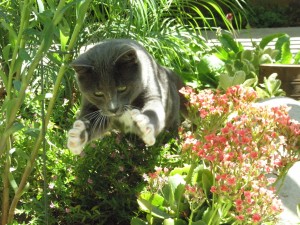 enough for me to get a shot.
 Back to the fascinating topic of cats finding their way to their former home when their family moves with them or they’ve been inadvertently taken away from their home. How do cats do this?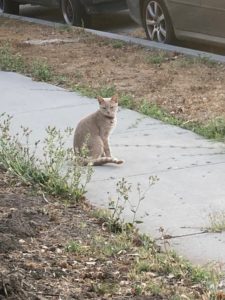
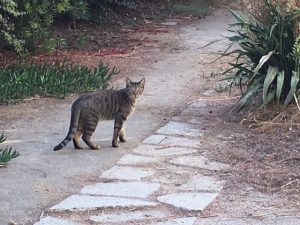 the feats they can manage.
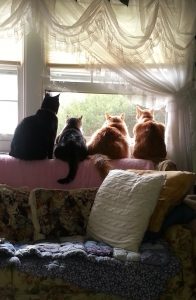 -long stroll. Had she moved in with someone down the street? Was she catnapped and taken miles away, finally finding her way home? The strangest thing about this situation was that we had Tina Marie spayed. Yet, when she returned, she brought two newborn kittens with her. She couldn’t feed them and they died. We never found out where those kittens came from. Did she take them from another mother cat she met along the way? Did something go her spay operation and she birthed them? Was this actually another cat impersonating Tina Marie? That’s a mystery that was never solved.
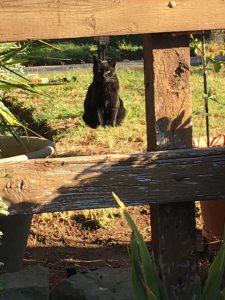 You all know that I like photographing cats. I used to carry a camera while taking my daily walks, now I just use my phone camera to capture the cats I come across. I have a collection of cats in trees, on fences, peeking out from behind flowering plants, peering
 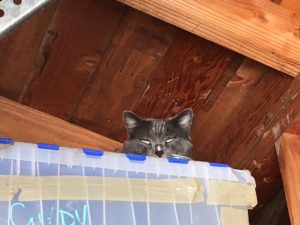 through windows, hunting, and just watching me pass by.
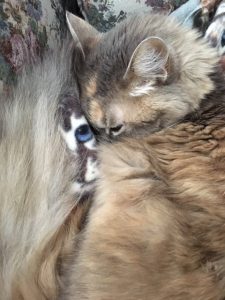 film, there are a lot of wasted pictures. Now, however, you can just delete those that aren’t up to snuff. You don’t have to pay to have them developed. For me,
  that’s a major technological shift.
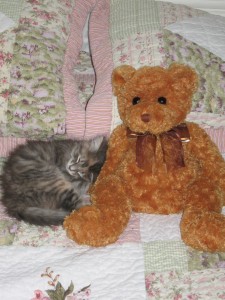 resist.
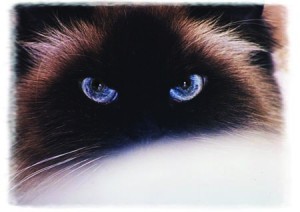 some of your cats. I’d love to see them.
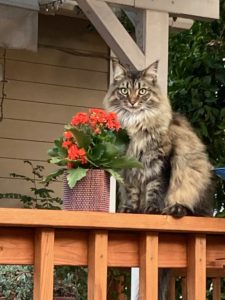 It’s not unusual for me to receive a bouquet of flowers from one of my daughters or a friend or neighbor. Like many, I do enjoy flowers. For my birthday this year, one granddaughter ordered a subscription to garden boxes. Each month for 3 months I received starter boxes for a particular plant. How fun is that? The boxes included the plant, a pot, decorative rocks, soil—and other fun stuff. There was even a Werther’s candy in one box.
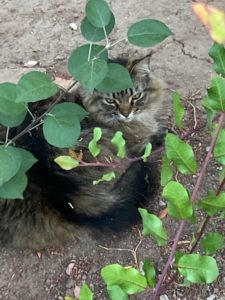 —well, Olivia is a year old now, but still, can we trust her not to each plants? So far she leaves my orchids and African violets alone. But these are not toxic to cats. So many other plants and flowers are—lilies being among the most dangerous, followed by daffodils, kalanchoe, tulips, chrysanthemum, hydrangea and evidently some daisies.
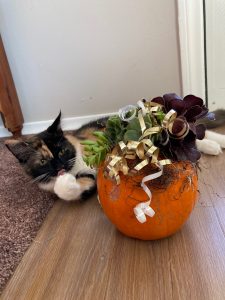 These plants are considered toxic to cats, philodendron, pothos, diffenbachia, peace lily, ficus, aloe. Sure outdoor cats are exposed to these plants and more that are poisonous, including oleander. However, it is less likely that a cat will be attracted to a dangerous plant out of doors since she has access to so many different plants. Her choice, if she wants to nibble on something green, is generally plain old grass. The indoor cat, however, will be drawn to anything new added to the household such as a bouquet or a new potted plant. That’s why when I receive a new plant or a bouquet I go immediately to the Internet to research the potential danger of that plant or those flowers to the cats. If it is considered toxic to cats it gets a special place on the deck or in the yard.
 Rags and his supporting human characters in the Klepto Cat Mystery series have fans. Readers adore my cozy mysteries. They’ve especially enjoyed losing themselves in these stories during the last nearly two years. Some readers have absolutely become hooked. Now they’re also reading the Calico Cat Mysteries. I sometimes wonder which stories have the most impact. What are readers’ favorites among these
  books?
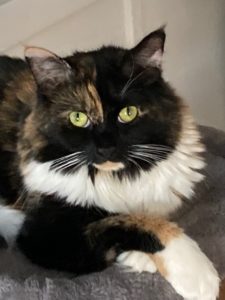 mind for years? Or did you get to know the cat before you chose a name? We name some cats for their coloring or markings or genetic background or maybe because of where we found the cat—Alabama, Laguna Beach… Sometimes a cat comes with a name. Do you change that name or keep it? I’ve done all of the above.
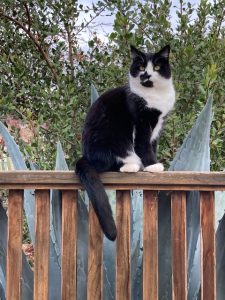 I once adopted a year-old-calico named Katy. We already had a Himalayan named Katy, so we let the new cat name herself. When we noticed that she always followed us into the kitchen—we couldn’t go into the kitchen without this cat following us, one day I broke out in song. “Someone’s in the kitchen with Dinah…” And it stuck. She became Dinah.
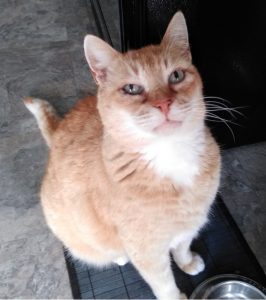 a sweet little lady kitten she was, we knew she needed a soft, gentle name. I’ve named a calico Cali and a white cat Snowflake. I named a shaded-silver Persian Crystal—partly because of her coloring and partly because I received her as a gift on my crystal anniversary.
 What about Olivia? Someone at the shelter where she landed after being rescued named her Olivia and it fit, so we kept the name.