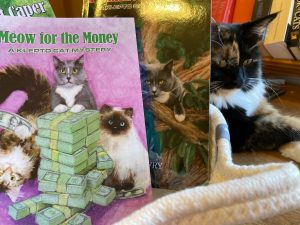
 This week’s blog posts will be all about the world of writing cozy mysteries. It’s been a period of interaction with fans lately, which is refreshing after the year we’ve had—so much isolation. It’s especially fun to chat with Rags’s fans and now Olivia’s. And it’s heartwarming to know that my stories (a record 9 published in 2020) have brought people so much comfort and joy and even a chuckle here and there for 9 years, but especially this last year.
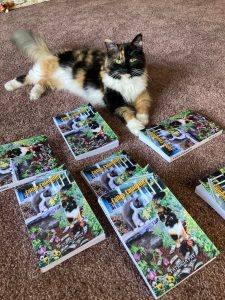
Olivia’s debut book, Calico Calamities, the 51st Klepto Cat Mystery, is weeks old and she already has followers/admirers. One even created a rubber stamp of Olivia’s paw print so she can PAWtograph her own books in the upcoming Calico Cat Mysteries series. What fun! The list of preorders for autographed and pawtographed copies of Book 51 is growing by the day. (Author copies are expected to arrive here late this week.)
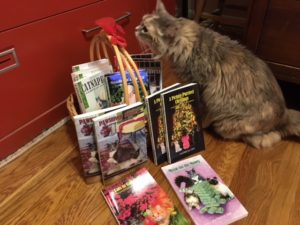 Before I started writing fiction—which has been the most lucrative of all the writing I’ve done in my career—I taught authors how to build a business around their writing. Most authors, as you can imagine, do not want to deal with the business aspects of authorship—the biggest block for them/us is promotion. Yet, if you want to sell what you write promotion is absolutely necessary.
Books need exposure. People won’t buy your book if they don’t know about it. So how does an author get exposure—it’s called publicity—and you get publicity through promotion: Blogs, a facebook page and other social media, podcasts and webinars, as well as in-person appearances: presentations, book fairs, panel discussions, library and school visits, conference attendance and so forth. Many authors send out newsletters either regularly or periodically. I’ve been known to run and also participate in book giveaway  contests. You can write short stories or articles for print and online publications for added exposure and credibility, and always carry books in your trunk in case you meet someone in your daily travels who wants a copy, because another promotional ploy is talking about your book everywhere you go.
Coming up with items and ideas to use to promote your books is also important. The paw print stamp is an example. Another  example is products related to your book theme—things you can sell or give away, such as bookmarks, packets of note cards featuring your book cover, calendars, pens, tote bags, coffee mugs, even jewelry and t-shirts. Create a stuffed or ceramic replica of your main cat/dog character, produce a book of poetry featuring your character, or pjs, a cat toy…the ideas are endless.
I mentioned autographs earlier. Books sold through online and storefront bookstores are generally not autographed, so some authors (including me) will provide buyers with an autograph written on an adhesive-backed label to attach to the book after  purchase. Nice touch. And don’t forget about connecting with other authors and reader-related websites for added exposure. Enter contests and flaunt your wins.
 Promotion can be fun, and the writing is fun (for a writer), but as I said, publishing is a business, and there are legal aspects a writer must deal with as well. If you sell books, you need licenses, there are fees to pay here and there. If you’re publishing under a fictitious business name (name of your publishing company), in some states you’re required to apply for a fictitious business permit and renew that every so often. You’ll need to formally copyright your books and keep clear and concise records of book sales and expenses. My expenses include fees for someone to format my books, my webmaster, a cover designer, editing, purchasing the International Standard Book Numbers and barcode. I also keep track of travel expenses when I attend conferences, book fairs, and other events related to bookselling and promotion.
This gives you a sneak peek into the business life of a writer. And you thought we just lazed around all day listening to our muse.
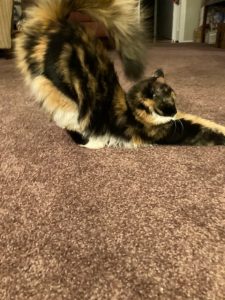
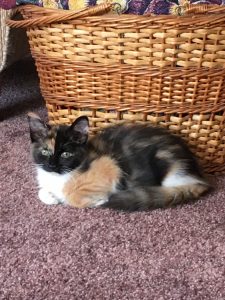 Have you ever noticed how a cat walks? I love watching Olivia walk—she has such a cute saunter. She’s a cat with catitude, but I never noticed that she and all other cats—in the home and in the wild—walk by moving the two right legs, then the two left legs. Ever notice that? This is maybe the only thing cats have in common with giraffes and camels.
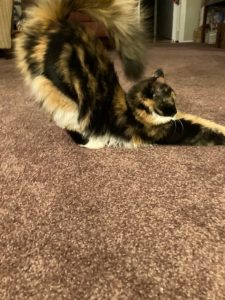 however—lions, tigers, and cheetahs. And one interesting similarity is their propensity for carrying that saggy tummy sack. I thought that happened after spaying a female cat—a hormone problem. But no. The saggy tummy is typical in both the male and the female house cat and wild cat, and there’s a reason for it.
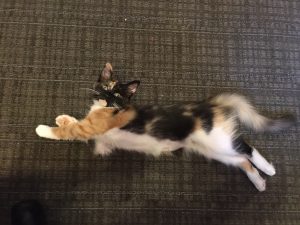 That flabby flap is called a primordial pouch. It’s evidently a flap of skin padding that is designed to protect vital organs during fights. It also stretches to allow flexibility in movement when the cat runs and jumps. Who knew?
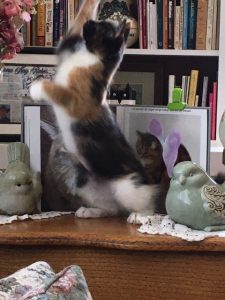 including her tail. Do you have an accordion cat?
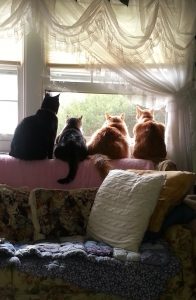 I’m writing another story involving cats on the move, so I’m researching traveling cats. I’m interested in how far a cat can travel within a certain time when motivated to get from one place to another. How far might a cat roam from its home during a typical day’s outing?
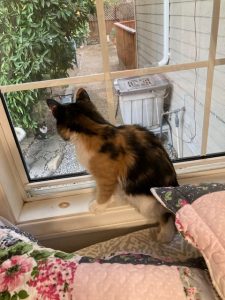 about cats that had traveled long distances for one reason or another. And it appears that cats don’t do much of anything without a reason.
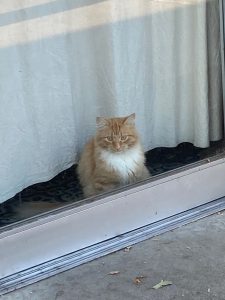 Persians seem to be good travelers. One Persian traveled for a year to find her humans who had moved. She walked (and maybe hitched rides) for a year to make the 1,200 trip to a place she’d never been.
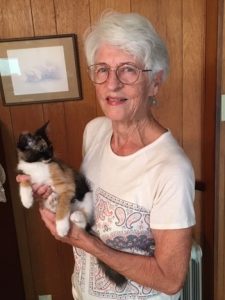 No, I didn’t make it up. April 19 is actually observed by many as National Cat Lady Day. This official observance started three years ago at CatCon, they say, in order to change the traditional perception of the crazy cat lady as being a doddering spinster with more cats than she can care for.
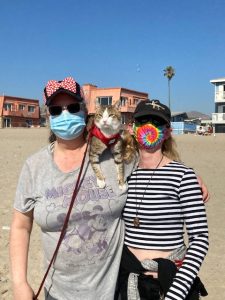 related to cats, as well as veterinarians, cat behaviorists, cat rescue people, breeders, cat show participants, and more. I attend the conferences wearing cat ears—and believe me I’m not the only one. Many of us also wear clothes with cat motif or cat patterns—slippers, sweaters, t-shirts, skirts—you name it.
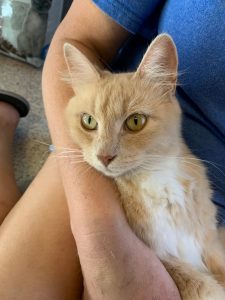 I often speak at the conferences. I used to talk about book marketing, for those who are writing or have written a book related to cats. Now I sit on panel discussions about writing cozy mysteries with cats.
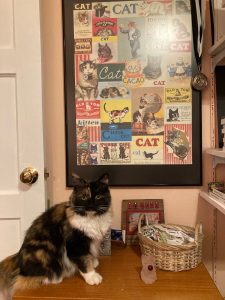 read one of my stories they feel as though they’re spending time with old friends—that thrills me. Some say they’d like to sit down over coffee with some of my characters. Some say they’ve learned more about relationships by reading my Klepto Cat Mysteries. When I hear/read statements like these I am beyond thrilled. What better compliment can you get than that your characters come across as real and that people actually develop an emotional connection to them?
 Many non-writers are interested in what actually goes into the writing process. They ask, “Do you sit and wait for inspiration?” “Where do the ideas come from?” “Do you write every day?” “What’s your schedule?” I get different questions from other authors or those writing their first book. They want to know, “How do you know when the book is finished?” “How do you discipline yourself to write?” “Do you have beta readers and editors?”
 tomorrow’s post because it’s perhaps the biggest question here. As for the other questions, I get up every morning around four a.m., feed the cats, start the coffee, drink a tall glass of water, squeeze a glass of orange juice, and go to work. I write for most of the day, breaking occasionally for food, a walk, household chores, errands and my latest distraction, our calico kitten, Olivia. Around 11 almost every day Olivia comes into my office and begins chirping. Yes, her mews are like chirps and she won’t stop until I leave my office with her and engage in a play session. After a wild game of chase-the-ball, she goes down for her nap and I go back to the computer.
 I’m so well disciplined after 48 years of writing professionally that I don’t worry about distractions such as Olivia, phone calls, a surprise visit, a spur of the moment jaunt to the lake or out to lunch. I can go back to work and pick up where I left off without issue. I still put in at least eight hours per day most days.
 about everything except the writing, the shipping, the promotion, and the bookwork. And I still do my own housecleaning and cooking. I hire a gardener and window washers.
 The short answer is, I adore cats, I have an even greater respect for cats since I began writing about them. And I like reading light material—quaint, cute, light-hearted stories with only a little suspense and mystery. So of course that’s what I wanted to try to write.
 This week we’re exploring the world of fiction-writing. Here are some scenarios you might get a kick out of. As you may or may not know there’s a lot of research that goes into most fiction books. I’ve had to research such things as when were bomb shelters the rage, at what point did phone booths disappear—are there still any around, various cat maladies and treatments, cat behavior, plants found in certain geographic areas, physical capabilities of cats, cat car seats, modern day cat carry packs, and so much more.
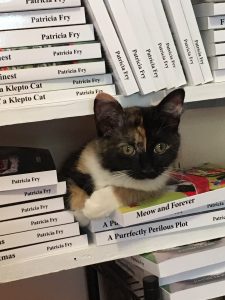 I’ve added an interesting feature to my Klepto Cat Mystery website. I realized, while working on one of my books, how much teaching goes on in my stories. So I made a list of the things you can learn from my Klepto Cat Mysteries and added 100 of them to my website.
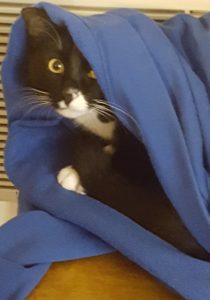 Cats are probably the most popular animal portrayed on the Internet today. But then you know that. There are billions—yes, literally billions of cat pictures and videos online. And that was reported in 2015. In fact some say the internet is a virtual cat park—a social space for cats.
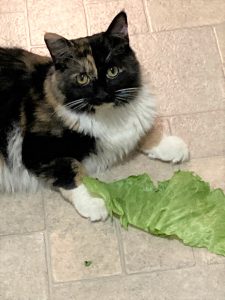 are a rabbit, a raccoon and pigs. Check it out.
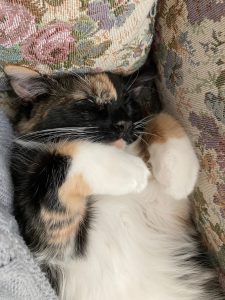 you it is hilarious and in some cases a little worrisome. But all in all the cats seem to come out in good shape. It’s one of those videos showing cats in small spaces on steroids. In fact, they call these cats, liquid cats. Need some light entertainment? I think you’ll enjoy this series of cats squeezing themselves into and through some incredibly small spaces. Who says cats rely on their whiskers to gauge a space before entering??? Not these cats. Enjoy!
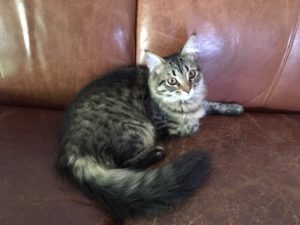
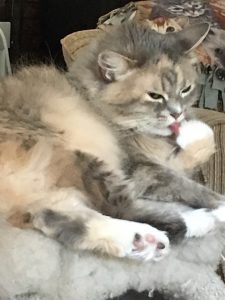 Tomorrow is National Tabby Cat Day. Well, some tabby groupies celebrate on April 30, so I’m not actually sure when the official day is. But I have an idea. Why not celebrate the tabby, black cat, pointed cat, calico, tuxedo and all the other cats in the world and in your home every day of the year?
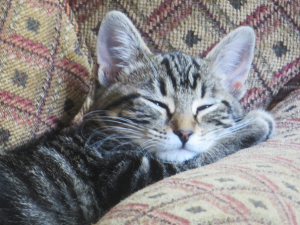 Maine coon cat, American shorthair, Persian or any number of other purebred cats, you could have had a tabby. Tabby is not a breed, it is a color
 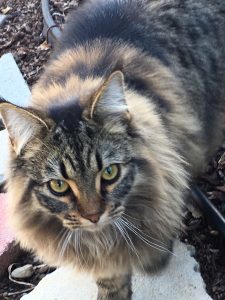 pattern, but some breeds include tabbies.
 middle.