 To celebrate National Love Your Pet Day and, since you love cats, I’ve compiled a short list of books featuring cats. Get ready, you may not be familiar with some of them.
Distillery Cats; Profiles in Courage of the World’s Most Spirited Mousers. Brad Thomas Parsons is the author and he features thirty felines who guard the grains in distilleries.
Have you read Cat Person by Kristen Roupenian. Did you read her short story in the  New Yorker last year? It was the most read story of the year. Publisher noticed it as well as readers and Kristen got a high-figure deal. I believe the story will be included in a collection of short stories called, You Know You Want This. Watch for it soon.
Here’s a controversial book on a controversial topic: Cat Wars by Peter Marra and Chris Santella. This book is focused on the current trap, neuter, release (TNR) program designed to save and protect feral cats. Peter Marra is part of a movement against free-range cats and his book offers thoughts and ideas about a better way to help feral cats while protecting the bird population, for example. Learn more about this book here: https://news.nationalgeographic.com/2016/09/cat-wars-book-feral-cats-euthanized
Here’s another controversial book. According to reports, some people love this book, others hate it. It’s Why Paint Cats: The Ethics of Feline Aesthetics by Burton Silver and Heather Busch. This book pokes fun at the world’s obsession with cats.
Have you read How to Tell if Your Cat is Plotting to Kill You? If you enjoy cat humor, you might get a kick out of it. I loved the book of poetry by cats called, I Could Pee on This.”
 What about this one: 67 Reasons Why Cats Are Better Than Dogs by Jack Shepherd? It’s a fun little book filled with tongue-in-cheek humor and lots of cute photographs.
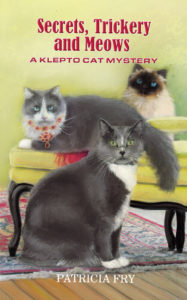
While you’re looking for something good to read, if you want a light and easy read, pick up one of my Klepto Cat Mysteries. Many fans read them in one sitting. While each book stands alone, I certainly suggest reading them in order, Catnapped, being the first in the series. That way you understand the progression of the series and get to know the people more intimately. Some readers remark how much they like the people involved—except for the bad guys, of course. And they love Rags and following along with his shenanigans.
If you read some of the books and haven’t gotten back to them, I suggest starting over. Pick up Catnapped and then read Cat-Eye Witness, etc. I’ve actually re-written the first four books. I believe they read better. Some fans have read the entire series twice. If you like the idea of the series, but just haven’t sat down to read them, treat yourself this winter. If you like cozy mysteries, light reading, I think you’ll be glad that you did. The Klepto Cat Mysteries are available at Amazon.com in Kindle and print form. Book one, Catnapped and Book 26, CATalyst for Clues are also audio books. For an autographed copy of the print version–perhaps an Easter gift–order your copies here: http://www.KleptoCatMysteries.com
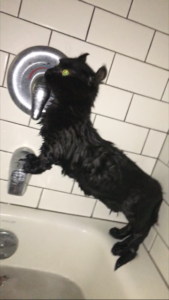 When I first heard of the munchkin, I assumed it was a single new breed of cat. And because I do a lot of research for this blog, I often stumble across all sorts of interesting facts and trivia about cats. Last week I learned that there are actually eight munchkin cat breeds. There’s the Kinkalow, which is a cross between the munchkin and the American curl. This breed was established in 1994 and named for the kink in the cat’s ears and the fact that the cat is low to the ground.
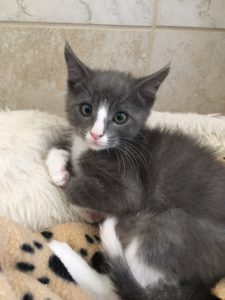 What’s in a name? Naming a cat can sometimes take a lot of time and trials. My mother, for example, gave her gift kitten a name, but couldn’t remember it. She kept calling him Smokey, which was the name of her previous cat. So he became Smokey Two. I rescued a sweet calico from a shelter many years ago. She came with the name Katy. But we already had a Katy in the house, so we decided we’d better change her name. But we were stymied as to what it would be. I said, “Let’s let her decide.”
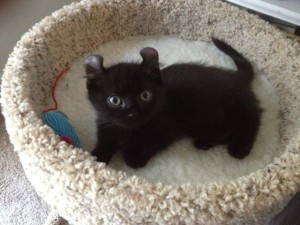 the Smokey before him. I had a Calico named Callie and a white beauty named Snowflake. Many people name a striped cat, Tiger and a Manx, Stumpy or Rumpy. My grandson has a pure black munchkin with the Kinkalow ears and they call him Bruce Wayne (Batman). Blackie or Ebony is used a lot for a black cat, Tabby for a tabby cat, Tangerine or Marmalade for an orange cat and so forth.
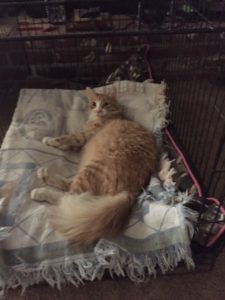 Some cats are harder to name than others. I found Max’s name at a high school graduation. I listened to the names that were being called out and when I heard Max, I knew that was it. I know, it’s one of the most popular cat names—nothing unique. But it sure fit our Maxie boy.
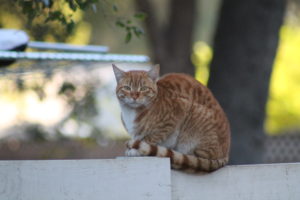 A favorite topic here, as you may have noticed, is whether to let your cats outside or keep them in. And a general consensus is, it depends on the cat. Cats are small, but some of them are mighty big in purrsonality. They know what they want and when and generally figure out ways to get it. Have you noticed that about your delicate kitty-cat?
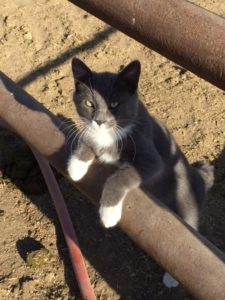 been allowed to venture outside. She loved being inside, but she definitely wanted the option to go out on demand and boy was she demanding. It took us a while to realize that, while she enjoyed playing out in the sunshine and adventuring in the backyard, she also did her potty-duty while outside. In fact, she refused to use the litter box, even when it was raining.
 What does your cat do that makes you laugh out loud? If you’re like me, you can’t help but open videos promising cute cats or dogs or other animals doing funny things. No matter where you’re watching these, you probably burst out laughing, even while waiting in the doctor’s office or for an oil change.
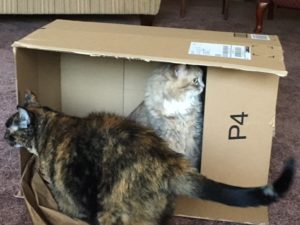 what’s inside the box; they just can’t wait for us to empty it so they can explore the cardboard cave, shred the packing paper, climb on it, jump over it, play hide-and-seek around it. When it’s a large box, I’ll sometimes cut windows and doors in it and turn it upside down. Generally one cat will claim the inside and do her best to keep the other cat at bay. A wrestling match might create a new castle guard and the other cat becomes the outsider.
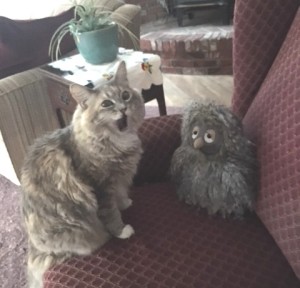
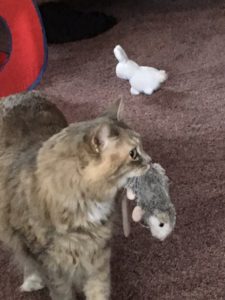 Lily still brings me her stuffed toys on a daily basis. Every couple of days I gather up her toys—usually a dozen or more of them—and return them to her toy box. Within hours, they’re all spread out generally around the cats’ water bowls, at the bedroom door, and around my feet in my office. Rarely does she drop her toys in the living room, but last night she brought me her stuffed kitty. Some toys are moved regularly. I find her little owl at the bedroom door in the morning, but after her breakfast, she brings it to me in my office. Some toys like the owl and the little kitty go back and forth. And she always announces herself as she brings a toy to me—whether it’s in broad daylight or the middle of the night. Sure wish I knew why she did this. But I think it is just the sweetest gesture.
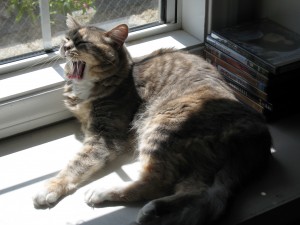 I thought I’d continue with Monday’s theme by listing some of the animals thought to be extinct—many of them having gone extinct in our lifetime. Let’s start with the cats: The American cheetah no longer exists, neither does the Iberian lynx (deemed extinct in 2004). And at serious risk of extinction, with very few left in existence, are the lemur leopard and the Sumatran tiger.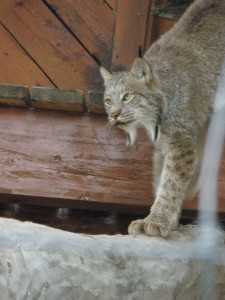
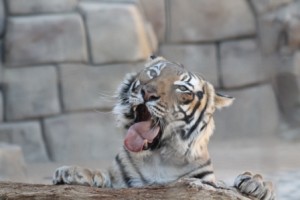 beautiful snow leopard is struggling. Most of us like bears—how many of you have one or more adorable stuffed teddy bears? I have several and Lily-kitty has a few of her own. It’s sad to know that polar bears are being seriously affected by our choices and way of living. They aren’t on the endangered list yet, according to some, but they’re being affected by pollution and climate change (due to our handling of the environment) as their natural habitat is melting away. The adorable koala bear is also at risk because they’re slowly losing their primary food source.
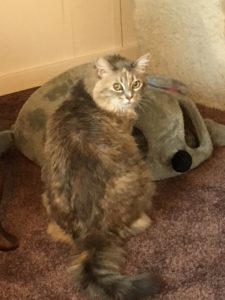 We’ve all seen the drawing (or photograph) of a clearly obese cat with the caption: “I’m not fat, I’m fluffy.” And it’s that fur that can sometimes be a hindrance in determining whether your cat’s putting on weight or even losing weight–both which can be red flags in determining her level of health.
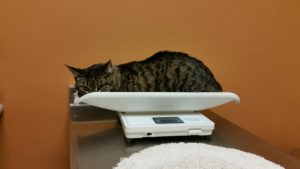 to tell me when we should cut down on food for our cats and engage them in more exercise, etc. However, we’ve been to see the vet recently and both of our cats are over the average weight. Lily is in the twelve pound range and Sophie hit fourteen pounds this trip. So I guess our vet considers this normal for our cats.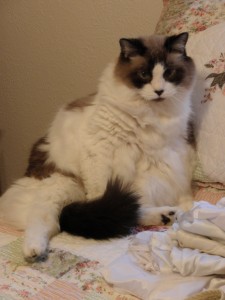
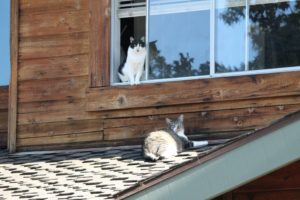 individuals use solar panels, have a water-wise yard, and use no or few chemicals, and, if they have a cat, they keep it indoors. An outdoor cat, they say, can be a detriment to the natural environment because of the cat’s tendency to hunt—in particular to kill birds. Here’s the link to the story:
 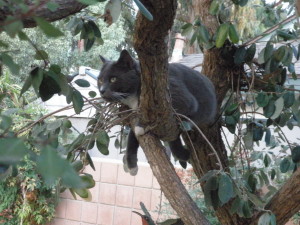 If you have an outdoor cat or an indoor/outdoor cat who often or occasionally brings you a bird, or if you sometimes find feathers around and suspect your cat, there is hope. You can deter your cat from encroaching on the wildlife in your neighborhood. In fact, here’s a good site with some interesting suggestions:
  two birds a week. She knew she had to do something and she cured his killing prowess by fitting him with a BirdsBeSafe collar. Here’s how it works: evidently birds see bright colors very well. (I’ll remember that when I go on my bird-photography adventures.) So the BirdsBeSafe collar is brightly colored and quite noticeable—sort of like a clown collar. According to Willson, it was 100 percent effective with her cat. According to the BirdsBeSafe collar site, researchers studied for seven years to discover the most effective color combinations for the collar—those that would warn birds of a cat’s presence soon enough for them to escape. They claim their product is 87 percent effective. It’s made to be comfortable and safe for the cat to wear. And motorists are more apt to see a cat wearing one of these collars.