 Not all feral cats keep to themselves and out from under foot. In fact, some can be quite assertive and cranky and downright dangerous.
It’s evidently commonplace to receive alerts about dangerous animals on the loose in Florida—but these alerts generally refer to bears, escaped tigers, snakes or alligators. Recently, however, the alert pointed at a 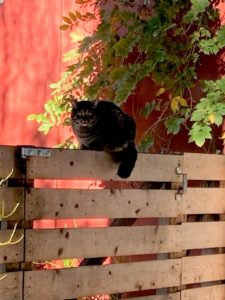 cat—a feral cat on attack. That rascal actually put two people in the hospital.
I don’t want to give cats a bad rap, but even beloved pet cats can become aggressive and even attack their humans. One woman claims her cat was misbehaving and she told him she was going to put him in his room if he didn’t straighten up. What did he do? He rebelled and attacked her. She had to call the police. That cat, as I understand it, soon found himself as a ward of the local humane society.
There’s also the story of a cat going berserk in the cockpit of a plane. Yeah, I wouldn’t want to be that pilot. A berserk cat is not a pretty sight.
How do you handle an angry and aggressive cat? Most experts recommend prevention. In other words, provide plenty of entertainment and stimulation for the cat. Do not engage in rough play that might provoke the cat. Learn the triggers and avoid them—yelling, aggressive behavior of your own, etc. Here’s a sight with some good ideas for dealing with an aggressive cat. https://www.wikihow.pet/Make-Your-Cat-Stop-Attacking-You
 As you know cats are a big deal and big business. Companies are coming up with more and more ideas for consumers with cats. While doing some research the other day for a story I discovered that there are wipes designed specific for cats. You know, if you need to do a quick wipe of a cat who got spilled on or who rolled in something icky—it happens. These are also good for cleaning excess dander from a cat’s fur before
  cat-allergic guests arrive. If you want to do a quick wipe of your cat’s fur and avoid the trauma of giving her a bath, consider keeping pet wipes on hand. Be sure to choose those that are safe for cats (not only dogs).
 shopping spree). Here are a few things I found:
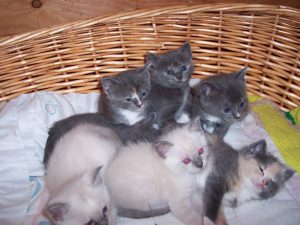 After I posted my blog about the plight of the feral cat in Flatbush (and other places) and the importance of spaying/neutering our cats, a reader/friend sent me a note, She has been feeding feral cats in her yard for some time. She says: “I was just thinking about the 11 kittens I had spayed/neutered way back in 2011. The mother had three litters in my yard, then disappeared, probably died, otherwise she would have
 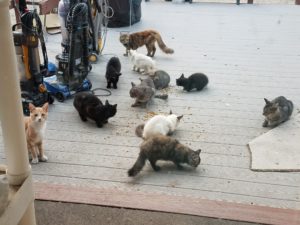 been back with another litter.
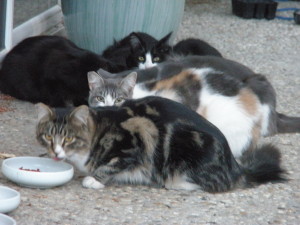 Looking at the crazy number of cats that can be born always sounds outrageous. But thinking about my 5 girls bringing 35 kittens to my yard in one year is pretty scary!”
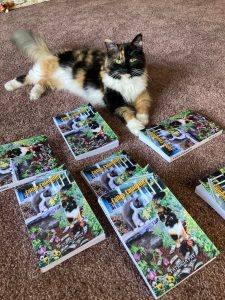
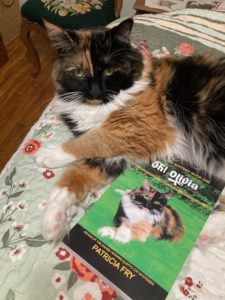
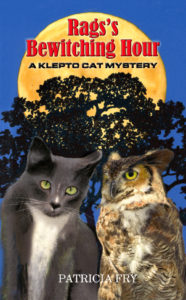 While I was on an island tour with my three daughters celebrating my birthday last week, my team published my latest book—Rags’s Bewitching Hour.
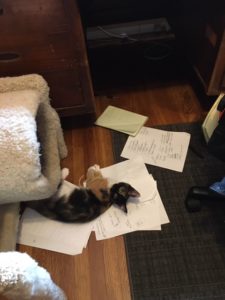 If you’re into celebrating cats, today should be a good day for you. Not only is it National Take Your Cat to Work Day, it’s also National Garfield Cat Day.
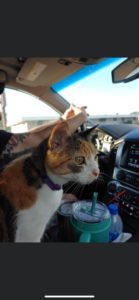 office downtown or a hospital or gift shop or restaurant? How would it work out in your work environment? I can’t think of any cats I’ve ever had that would allow it—and think of the chaos an unwilling cat could create at a workplace.
 But many of us with cats work at home, so cats are in our workplace all the time, every day, twenty-four hours.
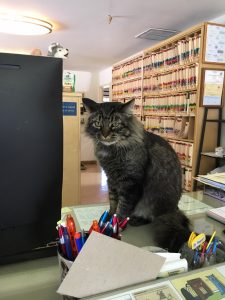 businesses where cats reside and watch over the work their people do. With the advent of the pandemic and isolation, millions of workers brought their work home amid busy households with children, dogs, gerbils, and, of course, cats. And for many of them there were definitely adjustments to be made.
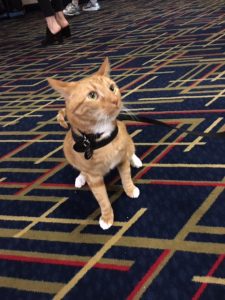 However I also know a couple of cats that would enjoy accompanying their person to their workplace. I’ve never been blessed with such a cool and calm cat.
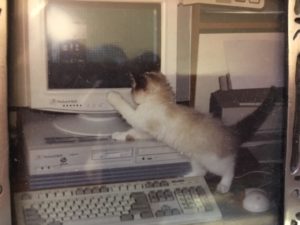 business. There are therapy cats working in nursing homes and places of high stress such as airports. Have you heard about Duke Ellington Morris? He was found
 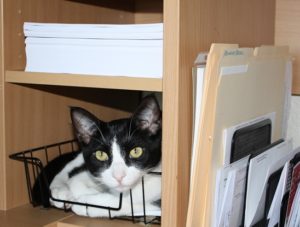 starving in a cat colony and rescued. When his FURever family realized what a special cat he is, they decided he could be a helping cat and he is. The Duke is now part of the WAG Brigade at the San Francisco Airport as a therapy cat for passengers. He’s so adorable in his uniform.
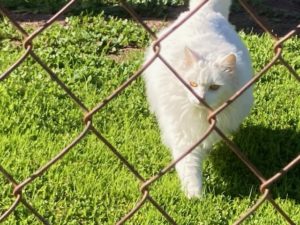 Wednesday I shared a story about the struggles and successes of street cats in New York. I think most of us have stories of helping feral or street cats—strays—whatever you want to call them. I’d love to share some of your stories in upcoming blog posts. Send them here in the comments section of to me at
 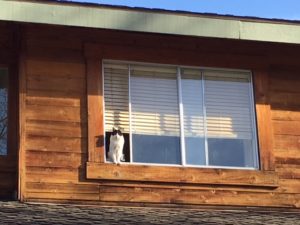 week along with statistics showing how dramatically intact cats can contribute to the torture and demise of cats by producing unwanted cats. People, it’s up to us to stop the madness.
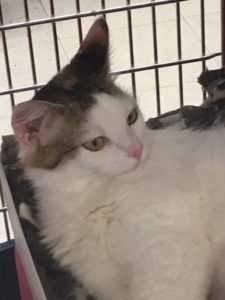 For my part, I’ve had a few stints taking shelter kittens to visit folks in nursing homes. I have volunteered at shelters. I have adopted cats and kittens from shelters several times. I rescued a litter of
 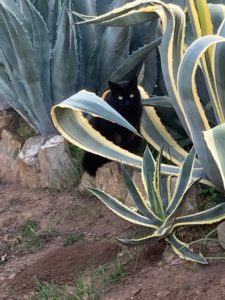 kittens I found in my woodpile. Kept one, who lived with me for 17 years; found homes for the others. I always have my cats spayed/neutered.
 I’ve also written numerous articles about the plight and care of cats, and I have published around 80 books related to cats—often focusing on the plight of the feral and stray cats. I’ve been writing this blog for about ten years.
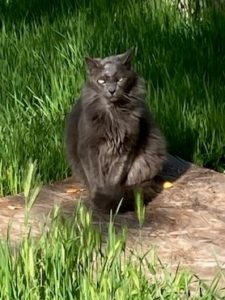 It’s a sad story, but one that is duplicated in many areas of New York as well as many other cities, counties, states. The number of street cats has risen and will continue to rise.
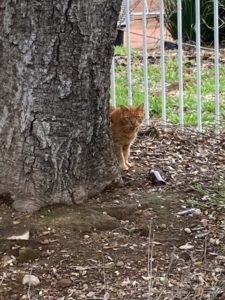 during the pandemic. Way too many of them have since returned to their former life and decided they can no longer care for the pet. Some cats have been returned to shelters, but many, countless cats have been turned out on the streets.
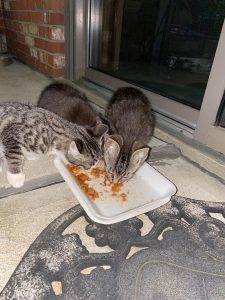 makes for an even uglier picture and reality. Thankfully there are people watching out for the cats—but not nearly the number that’s needed. They can’t be everywhere and tend to every cat and that’s the sad reality.
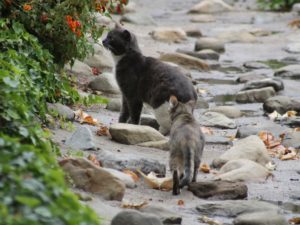 in their first six months on the street. Even the savviest and sturdiest street cat lives an average of just 4 years. There’s an estimated 500,000 cats trying to survive on New York streets.
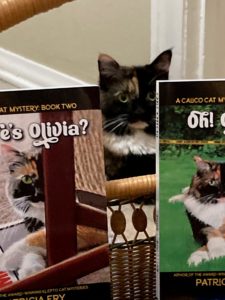 I adore Rags’s and Olivia’s fans. It is so much fun (yeah, and a lot of work) to write these cozy mysteries. And I so appreciate it when a reader takes the time to write me a note, leave a comment here at my blog, or post a review at Amazon.
 opinion, thoughts, feelings, impressions of the book. It’s helpful to me and useful to potential readers when you write your objections or concerns, and it’s exhilarating and encouraging to know what touched you, delighted you, made you laugh and that you were left, perhaps, wanting more, looking forward to the next book in the series and so forth.
 people do.
 If you read everything that comes across your desktop or laptop about the abilities of the cat, like I do, you’re surely developing a new respect for them. I mean, look at the myths and former scientific studies about cats that have been blasted in recent years.
 Scientists and animal behaviorists are discovering what many of us have known for years, that cats—at least many of them—are affectionate, thinking (conniving), intelligent beings.
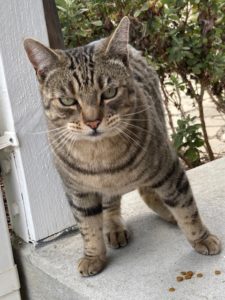 But this study is about the map of the cat’s mind. Researchers seemed surprised to learn that cats carry a map in their head of their home—each room and nook and cranny. Outdoor cats have an even wider map—a map of their neighborhood. They know where they can go safely and
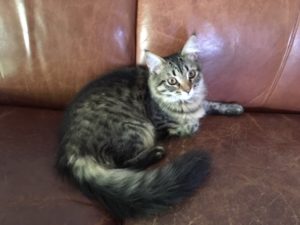 where there is danger—which houses have kind people and which have scary dogs, where the best hunting grounds are and what to expect at certain times in certain places—children outside, someone with treats on their porch,
 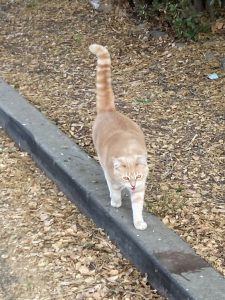 a bowl of water, butterflies…
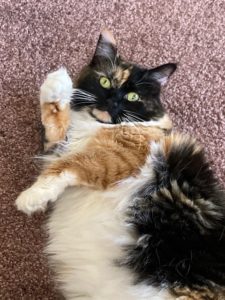 Do you have pangs of guilt when you walk out the door to run an errand, visit someone, go jogging, or, heaven forbid, leave on a trip? If your cats are like mine, they know when you’re getting ready to leave and they react—most likely with those sad stares that you interpret as, “You’re leaving me? How can you do that?
 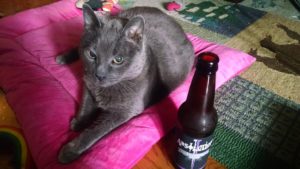 I’ll be all alone…” And if you’re like me, you tell your kitty, “I’ll be right back. I love you.” Or “Mommy has to go get your food. Okay, I’ll bring you a toy, too. I won’t be long. You go take a nice nap and wait for me.”
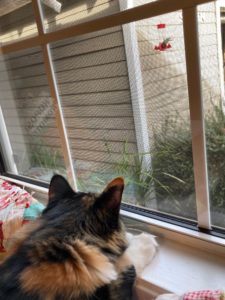 Or “Yes, honey-britches, I’m going on a trip. Mommies have to get away sometimes, but I’ll be back. Kathy and Valerie are coming to visit you,” I say cheerily. “You’ll have fun. They’ll play with you and pet you and feed
  you. You’ll be just fine and I’ll be back, I promise.”
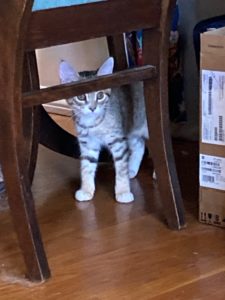
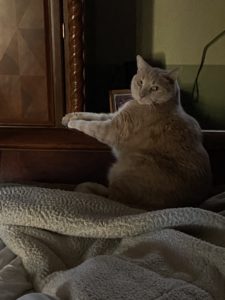 a chair or from around a corner, it’s possible that they have been into some sort of mischief. Don’t worry, you’ll find it—eventually.
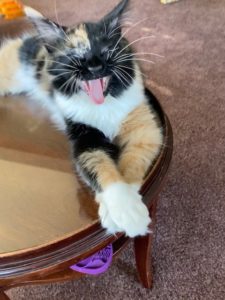 When I return home from an errand or walk or trip, I get something in between these. It depends on how long I was gone. Sometimes Olivia is waiting at the window when we return. Other times we don’t see her for a couple of hours after we get home. She has a spot under the bed where she likes to hang out when she wants to worry us or make a statement. One thing that seems to be consistent with a cat is that they aren’t—consistent that is.