 We’ve become accustomed to seeing eye dogs, but did you know there are also hearing alert dogs, seizure alert dogs, autism service dog, and medical alert dogs that will alert for migraines, diabetes and even heart issues?
For years, we’ve had pet dogs and cats and other animals for our enjoyment, pleasure, and even peace of mind. We feel good when we’re romping with our dog, laughing at our cat’s antics, relaxing while petting a purring cat. So in a way we’ve all enjoyed therapy aspects of our pets. I mean, who can’t use a little laughter therapy—relaxation therapy. And who hasn’t felt the sweet comfort of a beloved pet during a time of sadness? Animals seem to know when we need a little bit of quiet attention—the gentle touch of a paw, a chin resting on your foot or lap. If you’ve had pets, you’ve experienced this.
In recent years, however, all sorts of animals are being used as therapy pets—to help their owners get through the day—to help them maintain a healthy emotional balance. There are even agencies that will register your pet as a therapy animal and some of them are bogus. I think I would be suspect of any online program that would issue you a letter of registration simply after you’ve filled out a brief questionnaire regarding the nature of your emotional need and the name of your pet.
I notice there are many such opportunities online. If you’re considering purchasing a support animal or validating your pet as a support animal, you might be interested in some of the regulations. Here’s a site that responds to many questions about service dogs, for example.
https://www.psychdogpartners.org/resources/frequently-asked-questions/laws
There are agencies and organizations that oversee the extensive training of dogs to be used as service animals. At the end of rigorous training, the dog either passes or doesn’t. Not all dogs make it to graduation. Some simply become wonderful pets. However, there’s no training required for a pet to become emotional support animal. But you do need a doctor’s okay in order to get one registered. Stay tuned this week, I’m going to bring more information about therapy pets and service animals.
 You see articles all the time featuring reasons why dogs are smarter than cats or cats are smarter than dogs. But I came across one this week saying that a raccoon may be smarter than either the cat or the dog.
 brain and the number of neurons. According to Neuroscientists, dogs have twice as many neurons than cats. But a more recent study included a smattering of other animals—ferrets, mongoose, hyenas, bears, oh my! And, of course, the wily raccoon. The raccoon, they say, has as many neurons as dogs do. Makes sense. I mean, just look at how incredibly adept they are at finding what they need—food, for example. But then, they have hands as opposed to paws and hands can certainly get you into more places than mere paws can—drawers, ice chests, tents, windows, and so forth.
  Here’s an article saying that raccoons are smarter than humans because they have pretty much outsmarted every tactic we’ve used over the years to keep them out of the trash, including a rather sophisticated system in Toronto that they recently figured out.
 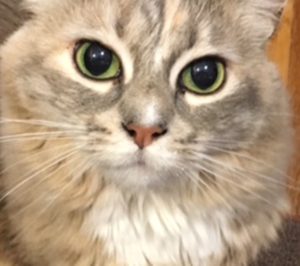 Monday we focused on a cat’s ability to see beyond what we see. Tuesday, we discussed the cat’s amazing hearing. Another super power cats possess is their sense of smell. In fact, I wonder how our cats can even stand to use their litter box when I need a clothespin on my nose to even clean it. Yes, I clean the litter boxes regularly, but whew! Sometimes they’re pretty ripe. Maybe cats have a way of holding their little noses.
 guest leave—I mean immediately—here come Lily and Sophie with wriggling noses. Even though they might have been out of sight the entire time the visitor was here, they go straight to the spot the guest was sitting and sniff the area for several seconds.
 How did he know that ornament was new or that these people had brought it? Actually, I don’t know what he knew—but he sure seemed to recognize that the ornament was a new addition to our house. Was it by sight, by scent, or by telepathy?
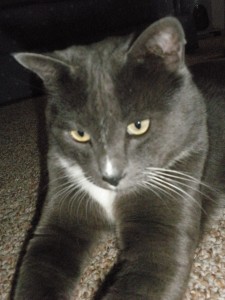 As you know, I pattern some of the cats in my Klepto Cat Mysteries after cats I’ve known. Rags, the star klepto cat, is a compilation of my mom’s confident grey-and-white cat, Smokey, and our toy-toting kitty, Lily.
 him. Just as in my story, residents reacted and set a couple of plans into motion, finally discovering who was taking the cats and why. While Catnapped is based on the story my daughter told me, my story is greatly and more interestingly embellished.
 Dolly is a tabby—a sweet girl who has taken on a few of Rags’s naughty traits. I used our Lily when creating Dolly’s character. And I’ve definitely called on the precious personality of my Himalayan, Katy, to create a couple of the cats in my stories—specifically Buffy and also Layla.
 Do cats really see in the dark? Can they see things as clearly as we do? Here’s a fascinating article that not only explains how a cat’s vision differs from ours, it show pictures of the difference.
  can. While we might be able to identify an item from 100 to 200 feet, for example, a cat might need to be as close as 20 feet to make out see the same object.
 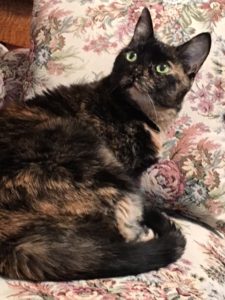 Do you ever wonder about your cat’s level of hearing? What are they listening to when they turn and twist their ears seemingly to catch sounds from a distance or maybe close—sounds we can’t detect at all? Is it a beetle walking through a tangle of weeds? Or a weed-whacker two blocks away?
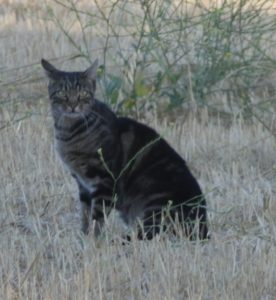 may not notice, and they’re also sensitive to loud noises and may even develop hearing loss when exposed to loud sounds for extended periods. Maybe you’ve noticed your cat leave the room when a movie you’re watching becomes noisy. I see Sophie stare at the TV sometimes. I thought she was just watching the movement across the screen. Perhaps, however, she is bothered by the sounds of loud speaking, a ships horn, or gunfire, for example. If you’re interested in knowing more about the workings of your cat’s ears—and you should be—here are a couple of sites I recommend:
 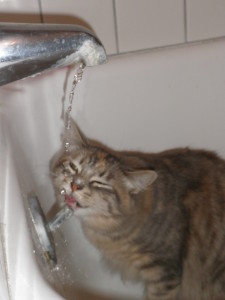 I know that Lily’s hearing is sensitive by her reaction to the sound of water early in the morning. Lily’s morning ritual includes a sip of water from the bathtub spigot. She waits in anticipation for me to turn on the faucet each morning. But if I turn it a tad too far, the water makes a gurgling sound as it goes down the drain and she doesn’t like that. She’ll sit on the edge of the tub staring at me when that happens, waiting for me to fix it so there’s no gurgling. As soon as the water is dripping at the level that’s comfortable for her, she’ll take a drink.
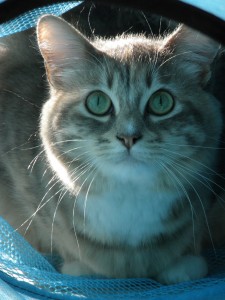 Here’s an article that will make cat lovers happy. It concludes that our cats really do love us. Oh they might act aloof, walk away in the middle of a good petting session, snub us when we return home, refuse to come when called, and avoid our loving overtures. But one group of researchers actually believe that at least some cats genuinely love their humans. They did a scientific study at Oregon University involving 38 cats and half of those cats actually chose human companionship over all other entertainment choices. Here’s the article.
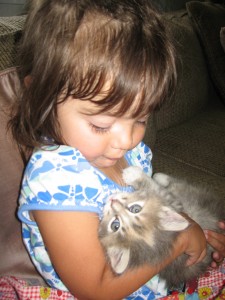 why a cat loves him and not you—here’s an explanation:
 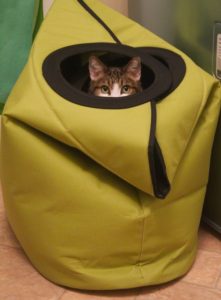 Cats and kittens that haven’t been handled much tend to be a bit shy. They might make up to one or two people after a lot of exposure to loving gestures, but they may continue to shun others. Anyone who has adopted feral and formerly feral cats and those who’ve had little human contact during their formative weeks, have probably experienced the hidey cat.
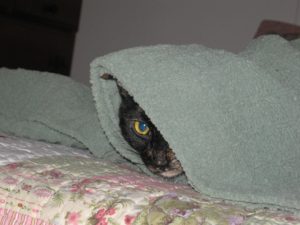 three times. Katy came from a kitten-mill. While she adapted to those of us in the household quite readily, the intrusion of guests frightened her. The only people she’d make up to were those who spent the night here. By morning, overnight guests were, in Katy’s eyes, part of the family. She was also relaxed with close neighbors when they’d come into the house. We believed that was because she recognized them and their scent through open windows over time.
 As Katy aged, she seemed to forget that she was afraid of strangers or she just didn’t have the energy to run and hide anymore. In fact, she’d invite petting from visitors. I’m so glad she got to experience the love she deserved—not only from us, but others—before she walked over the rainbow bridge at the age of nearly 18.
 brought her home, she became a hidey cat, only allowing a few random people to see her. We still can’t figure out how she hand-picks them. She might hide from a cat-loving neighbor or friend and wander out to greet a delivery person or visitor who isn’t at all interested in cats. At Christmas this year, we entertained 20 or so family members, including all ages of children. Once everyone had left, Sophie stepped out from under the sofa in the living room where we’d congregated over the four hours or so. She’d been with us the entire time, only none of us knew it.
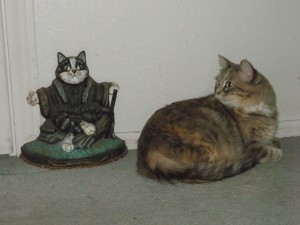 I couldn’t resist sharing this op-ed piece with you. The title is, “In this Era of Dog-Eat-Dog Politics, We Need More Cats,” by Cameron Smith.
 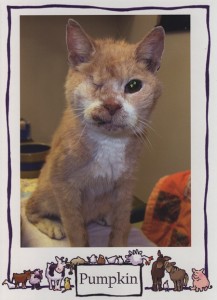 Just like with people or any other species, cats are sometimes born with deformities or afflictions. Sometimes there’s an accident or an illness that requires amputation. In most cases, the cat continues on, adapting to his plight. And sometimes there’s a perfect human companion ready and able to love such a cat.